A little over a week ago, I received the following question from a reader.  It's a hard one, and one I've heard before, so I thought I'd better tackle it:

Dear BW:  I am only attracted to femmes, but my girlfriend has become more and more butch.  At this point she's almost as butch as me.  I love her but I don't find her attractive when she looks so butch.  What do I do? - MM.

Dear MM: this is a tough one.  When we start dating someone, they're one way.  Two years later, they're another.  Of course, this is natural: people grow, change, evolve, etc.  (As my mom says, "We are all in a state of becoming.")  But what do you do when you don't like the changes?

In a way, your question is a version of the question, "What should I do if my girlfriend tells me she's trans?"  I posted an answer to that back in January, and you might want to check it out

Obviously, I can't give you a definitive answer.  But here are some important factors to consider:

  1. Have you talked with her about this?  Does she have the sense that she's changing?  Is it because she wants to be more comfortable in her own skin?  Because she sees herself differently?  Or because her gender expression is fluid and right now she's in a butchier phase?  Or just because high heels give her blisters and skirts are too chilly?
  2. What is it about her "butchness" that you find unattractive?  How she acts?  How she dresses?  Her compulsive need to fix things?  Once you figure this out, you'll be able to better identify what it is that isn't working for you (and in turn, what to do about it).  
  3. Relatedly: Maybe it's about you.  Maybe you feel threatened when your girl opens a door for you.  Or maybe you have preconceived notions about butches and are afraid she's going to act a certain way.  Or maybe you're just not aesthetically attracted to women who dress in men's clothing. None of these things are inherently wrong or bad, but understanding them will help you see whether your relationship dynamic can change for the better.
  4. I strongly urge you not to pressure her into becoming more feminine.  While I think it's important to be honest about how you're feeling, I also think it's important that you don't say things like, "If you keep dressing butch, I'm going to leave you."  For one, it's mean and can stunt her growth as a person.  For another, if she "fakes" being more feminine than she feels, the change won't last.
  5. You can love someone but not want to be in a relationship with her.  I'm all for "accepting people as they are," but your partner should be someone with whom you'd like to have sex occasionally.  If you don't find her attractive, this is a problem.  You are not obligated to stay with someone just because you're already in a relationship with her.  I feel like lesbians tend to err on the side of staying in problematic relationships too long, maybe because we're too worried about the other person's feelings.  (Yeah, I know--gross generalization.)  And keep in mind, too, that she deserves to be in a relationship with someone who finds her attractive and loves her as-is.  If you can't be that person, it's not just you that you're hurting by staying.
  6. Try not to jump to conclusions about what "butch" means for her.  Instead, talk to her and find out.  She may or may not identify as butch, and even if she does, her idea of butchness may differ from yours.  This happens a lot (as I know from personal experience.).  Does "butchness" signify fashion choices?  "Masculine" or "gentlemanly" behavior?  Sexual dominance?  All of these?  None?  Make sure you're on the same page.
  7. If you want to stay in your relationship, consider going to an LGBT-friendly counselor.  (Note: in my opinion, it's neither necessary nor sufficient that the counselor be LGBT-identified herself.)  This is something I should have mentioned in the "My Girlfriend Says She's Trans" post.  Talking to someone who's actually trained to help you think these things through can be tremendously helpful in getting to the root of a problem and figuring out whether the relationship will work.

As I see it, your choices are: (1) to break up or (2) to stay together and accept her as she is, and yourself as you are.  But staying together and trying to change her (or staying together and trying to convince yourself that you're still attracted to her) won't work for the long haul.

Has anyone else faced something like this?  Or been at the other end of it?  What did you do? 


Picture
Pic from "People": http://bit.ly/doRv3M
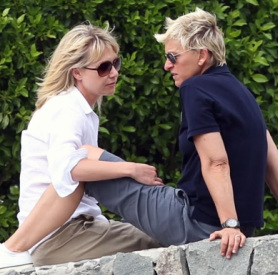
_Rachel Maddow and her partner, Susan Mikula (both pictured left) are 15 years apart.  So are Ellen and Portia.  My DGF and I also have an age gap of over a decade.  While May-December (or even May-October) romances can present occasional challenges, they can also be awesome. 

How big of an age difference is too big?

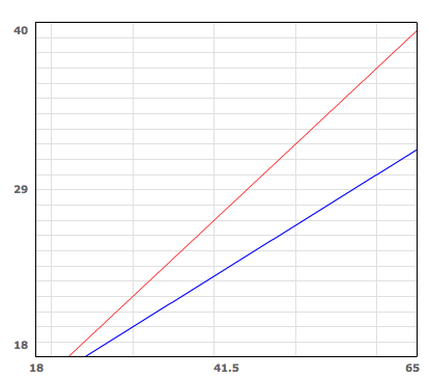
The unofficial formula is the "half your age plus seven" rule.  So if you're 30, the rule goes, the youngest person you should date is 22 (since 30/2 = 15, and 15+7 = 22).  When you're 44, the cutoff would be 29.  At 58, it would be 36, and so on.  And while this is a silly formula, it reveals an interesting truth: the older you get, the less age differences matter.  An 18-year-old and a 32-year-old are 14 years apart, but these 14 years encompass a huge gap in experiences.  Take those same 14 years, 30 years later, and you've got a 48-year-old and a 62-year-old.  Sure, there are still some differences, but the gap has definitely shrunk.

Age gaps tend to be more accepted in the queer community than they are in general.  Maybe this is because we're already doing something that differs from the norm, so an age difference on top of it is just icing on the deviance cake.  Or maybe it has to do with the gendered tendency in age differences among heterosexual couples.  Demi and Ashton notwithstanding, the "older man, younger woman" scenario is much more common than the reverse.  This pattern tends to reinforce gender inequalities and stereotypes in a way that queer relationships can't.  Or maybe it has something to do with child-rearing.  On average, fewer queers (especially gay men) have kids, so maybe people care less about age gaps when no little kidlets are involved.

As far as I'm concerned, barring illegality, there's no such thing as an age difference being "too big" unless it presents problems for the couple.  The bigger the differences, the more potential problems.  But the key word is potentialParticular problems may or may not materialize for any given couple.  Here are a few of the most common ones:
  • Differences in energy levels.  If one partner wants to climb mountains and the other can barely climb stairs, this may be an Issue.  Of course, age doesn't necessarily dictate energy levels.  My mom told me recently about her 70-something friend who was complaining one day about being sore.  My mom thought, "Oh, that poor thing...  the aches and pains of getting old."  But then the woman continued, "I really need to avoid doing my five-mile hikes on consecutive days"(!).
  • Health problems.  The older you get, the more likely you are to have health problems.  This is a generality, but on average, it's true.  If you end up with someone much older than you are, chances are that your partner will face a serious health concern before you do.  This worry may or may not be a deal breaker.  My DGF asked me once, "Are you going to want to change my diapers in 30 years?"  My answer: "If we've been together for 30 years, of course I'll change your diapers."
  • Cultural differences.  Maybe you grew up on "Barney," but she remembers "Captain Kangaroo."  Maybe you slow-danced to Color Me Badd in sixth grade, while she danced to it at her first marriage.  These kinds of cultural differences can be funny, bizarre, or depressing--it all depends how you interpret them.  Personally, I love that my DGF and I were raised in different decades.  It gives us even more to learn from each other.  Sounds trite, but it's true.
  • Life Stages.  Like differences in health, life stages are correlated with age.  (But "are correlated" doesn't mean "correspond perfectly.")  If one of you is hitting your stride in your career and the other is just starting grad school, it may take a little extra effort to appreciate where your sweetheart's at.
Bottom line: Age is not "all in your head"--but what you make of it is.  It's a factor that may or may not have important implications.  Like differences of religion, social class, or cultural background, it's worth taking seriously to help you understand and strengthen your relationship.

Six Relationship Tips for Couples with Age Differences:
  1. Hang out with other couples that are both your ages.  If one of you is 31 and the other is 49, make sure to spend time with couples in their early thirties and in their mid-to-late forties.  This way, neither of you will feel habitually left out because of age, and you might also gain some additional perspective about your partner by seeing where her peers are at, what interests them, etc.  (You might also try hanging out with people whose ages or lifestyles are very different from both of yours--it will underscore how much you have in common!)
  2. Don't cast your own age as superior.  If you're the older partner, a "been there, done that" attitude toward your partner's experiences is not useful.  Maybe you have extra insight, but that doesn't mean you know everything there is to know about your partner's situation.  Similarly, if you're the younger partner, don't assume you're inherently cooler or more savvy.  Treat each other as equals.  Your own experience is not better or more valid simply because it happened more recently (or longer ago).  And relatedly:
  3. Embrace your different experiences.  Talk about each others' childhoods, music preferences, school experiences, etc.  You have a lot to learn from each other.  Be open to each others' cultural preferences.  Maybe this means you take turns deciding what movie to watch or what music to listen to.  Try to understand and appreciate your partner's aesthetic sensibilities, even if you don't always share them.
  4. Talk about your goals.  This is good advice for all couples, but it's especially important for May-December (or even July-October) pairs.  Do you want to have kids?  Buy a house?  Retire?  Travel?  Make sure your partner knows what's important to you, and where you see yourself in one year, or five, or ten.  Just because someone is 39 doesn't mean her biological clock is ticking, and just because someone is 22 doesn't mean she wants to go clubbing.  Make sure your ideas about your partner's goals and desires don't rest on assumptions.
  5. Listen to everyone else, then ignore them.  Your daughter may be uncomfortable that you're dating someone her age.  Your friends may not see why you'd be with a woman who hasn't gone dancing since Tribe 8 was hot.  They may openly question your motives, or your partner's motives, or your sanity.  Listen to their concerns, answer their questions, and completely disregard their judgments.  Only you know what makes you happy.  
  6. Don't hide your partner away.  To avoid people's judgments and criticism, it may be tempting not to socialize with your partner as much as you might if you were the same age.  Early in the relationship, fine: you want to make sure it's working for you.  But once you see that it is, don't hesitate to show your partner around town and introduce her to your friends and family.  If she makes you happy, the people who really care about you will eventually recognize this, and will get to know your partner for who she is.

Your turn, readers: have you ever been in a relationship with an age difference?  Did the age gap bring any special perks or challenges?  What do you think about big age differences in relationships?


_This is the third of a three-part series of posts about butch-butch relationships.  These posts are based on my own experiences, as well as those of about 15 butches I interviewed who are, or have dated, other butches.  You can read parts one and two of this series here and here.


Toughness and Vulnerability

Several members of butch-butch couples said one aspect of their relationship they particularly loved was the mixture of toughness and vulnerability in their partner.  K was particularly eloquent on this point: "We don't usually think of butch women as being... vulnerable, do we? After all, if butch means masculine, and if boys are encouraged to be tough, then doesn't it follow that a butch lesbian should have a thick skin, and brush off all the hurts... collecting broken hearts and belt notches, and racking up a lifetime of hard knocks?  ...[T]he best thing about being with her [is that s]he makes herself vulnerable to me."

Butch-butch couples loved that their relationships allowed them not only to exhibit their own toughness, but to take refuge in their partner's toughness.  Z told me, "The best thing is that we are both very strong, in ways that compliment the other's weaknesses."  And Jennie wrote, "I can be strong and tough for [Lisa], be her butch. But I can also use her toughness and let her be my butch when I need it."  Indeed, as one astute femme Facebook buddy pointed out, the qualities that butches seem to appreciate in other butches aren't too different from those that femmes seem to appreciate in butches. 

Occasionally, some butches in butch-butch couples feel like their "masculinity" or "butchness" is threatened by being with another butch.  For example, one anonymous respondent feels a little uneasy when her partner wears a tie: "Then will they think I'm the femme?" she asks.  K.D. explains that she and her partner, Becca, sometimes "have butch-offs: 'Sweetie, let me carry that,' 'I'll get the door,' etc.  Sometimes I just want to be the sweetheart that helps the other person, comforts the other person, demonstrates chivalry etc. and when Becca wants to be that part of the relationship it can be interesting to navigate."  Donnie added that butches are a stubborn breed, and that neither partner likes to be the one to give in!

A few butches offered suggestions for making each other feel butch.  Jennie said that since she and Lisa "fight over some 'butch' duties," they needed "to buy 2 shovels, 2 chainsaws, etc."  Lisa added, "We need to buy a second snow shovel, cuz I am NOT watching her have all the fun!"  KT said that it's important to reinforce each others' butchness, since for both her and her partner, being a masculine or androgynous woman was an important part of their identity.  Z admitted to a little concern that her partner might one day leave her for a femme, since K has dated femmes before.  And alas, I can personally confess to having a similar pang of worry now and then.  It's not only important for butch-butch couples to respect each others' butchness, but to be very explicit about valuing this in each other. 


What Butch-Butch Couples Share

Navigating the world as a masculine-of-center woman can be tough, and several respondents mentioned that it's nice to have someone who understands those experiences first-hand.  AJ said that being in a relationship with another butch gives her 'permission' to be herself: "I'm allowed to be me.  There is no expectation for me to change myself or be more 'feminine' because I am female.  We are best friends and lovers.  She just gets me."  Becca wrote, "I truly appreciate that the other person knows where I'm coming from and understands what it's like to move around in the world as a butch."  Jess said, "The best thing is just having someone you can relate to." 
Picture
K.D. + Becca = awesome.
_Butch-butch sharing extends to more practical arenas as well.  Becca noted that she loves being able to share ties, and Jess wrote, "You can share - hair gel, clothes and shoes, toys. You have someone you can talk to about anything - getting called sir, woman staring at you in the ladies bathroom, packing or not packing, cargo shorts vs. cargo pants."  Several butches also mentioned that butch lovers are quicker in the bathroom: "Chopper doesn't take long to get dressed," Z said.  "[S]he is rough around the edges like me.  We don't really worry too much about whether our socks match or if we have some dog hair on us."  AJ said, "[I]t is quick to go out because I don't have to wait for her to do her hair, makeup, nails and stuff."

Nearly every respondent said the best part of being in a relationship with another butch is that they are simply very attracted to other butches.  Some of them are attracted exclusively to other butches, and others have no generalizable preference or pattern.  Either way, being in a relationship with someone to whom you are physically attracted is, well, hot.  Butch-loving-butches are no more in charge of their own chemical attractions than femme-loving butches, butch-loving femmes, or anyone else.  This is one of the many reasons it made me sad that a few people wrote, in response to my previous posts, that butch-butch relationships are "gross" or "a waste."  When two consenting adults are in love with each other, a "waste" is about the last thing I'd call it.


Butch in the Bedroom: Just Us and Our Socks

A few bashful butches didn't respond to this question at all.  But I'll let those who did tell you in their own words what it's like for two butches in bed:

Stacy: "Butch/Femme is something very different than Top/Bottom, but people assume it's the same.  I have had very different roles in each of my relationships in that area.  If you have enough trust with someone, you have enough freedom to explore all sides of yourself and your partner.  I believe everyone has their butch side, their femme side, their top side and their bottom side.  The fascinating thing is to see how yours pairs up in each relationship."
 
O: "Things are very hot in the bedroom. We are both takers and givers so it usually works out very nice. The only thing is sometimes we fight over who tops."

eL: "It is amazing.  I don't want to kiss and tell... but it was magical."

Donnie: "I think it's amazing! It's a true give and take of feelings, emotions, and love on an equal level."

Anon: "Really hot!  This might be because I'm really only attracted to other butches, and it's fun to have sex with people to whom you're attracted.  But yeah, it's great.  Sometimes there's a little argument over who tops, though, since we both love topping."

Becca: "I think it depends on the butches. :D  I appreciate that everyone expresses their sexuality differently, and I'm grateful that my current partner and I are very compatible and satisfied in that area."

Lisa: "Completely open and free. I don't have to always butch-up, and I don't have to always be the 'girl.'  We can wrestle, we can fight for who has top tonight, or we can take turns, or we can snuggle and cuddle."

LG: "Same as any other relationship."

K.D: "AMAZING!!! Luckily we are not the stereotypical stone butches (I do not feel like many are.) We get to enjoy each others bodies the way that they are with little to no question about it."

Tammi: "I don't know what it's like for 'just any' two butches in bed…  It strikes me as a creative wellspring of opportunities, and each time leaves me wowed and full of ideas for the next time."

Anon: "There's no hairspray on the pillowcases, or heavy perfume, or itchy lace underthings. Just us, and our socks."


There you have it, dear readers--everything you wanted to know about butch-butch couples, and more!  A huge thank you to the wonderful butches who let me interview them: AJ and Jo, K (aka Chopper) and Z (aka Zed), eL, LG and KT, Donnie, Becca and K.D., Jess and Beth, O, Stacy, Chelsie, Lisa and Jennie, and a handful of others who preferred to remain anonymous.


When I posted my last entry, I worried that it might be behind the times.  Especially considering the number of queers who identify as neither butch nor femme (and those who eschew labels altogether), I was uncertain whether the post would ring true for people.  But wow.  Not only were my fears unfounded, but the number of negative messages I received on Facebook made it clear that this is still a big issue.  Whether they specifically identify as "butch" or not, two masculine-of-center women who date each other face serious challenges, even within their own communities.

In this post, I continue exploring butch-butch relationships, based on interviews of 15 self-identified butches--10 who are currently in a relationship with another butch, and five who are single and date butches.  I've decided to expand the butch-butch exposé into three parts rather than two.  This part tackles "balance" in a butch-butch relationship, as well as how butch-butch couples have been received by others.


A Different Kind of Balance

One of the most-written-about joys of butch-femme relationships is the inherent "balance"--psychic, physical, and otherwise.  Many of the butch-butch couples I interviewed also talked about balance, using words like "synergy," "camaraderie," and "equality."  Several respondents said that in butch-femme relationships, gender roles had been too present for them.  All respondents were quick to state their respect for butch-femme relationships (and understood that prescribed roles are not necessarily part of that equation).  Still, they saw butch-butch relationships as a kind of "tabula rasa," with no default (in their own minds, nor in others' perceptions) about who opens the door for whom.  "In our relationship, it's as if gender roles just completely don't exist, which I love," KT said.  Lisa echoed this, saying that she enjoyed the "fluidity" of her and her partners' roles.  Chelsie wrote, "The fem women I was with treated me more like their 'boyfriend' and resembled the dynamic of a straight couple."

Personally, while dating men and while dating femmes, I always felt like there were prescribed "typical" ways for us to act.  If my femme date brought me flowers (or if I bought my DXH flowers), it was as if were were "bucking" certain roles.  I don't like having roles to buck, even if they're only imposed by my own culturally-programmed brain. 

Nearly all of the butches I interviewed had previously dated femmes, and said dating butches felt "natural" or "was a relief."  K wrote, "The dynamic of my relationship with my butch is so different from any of my relationships with femmes (or men, before that). I feel like I have finally been allowed to take off…  any kind of costume.  There's no doubt that I'm butch, or that she is: even though we're not terribly attached to labels, we both agree that either of us prancing about in a dress or makeup would be Just Wrong."  She also said, "But the relaxed and accepting dynamic of our relationship allows me to be myself first and foremost, with costumes optional, whereas in masculine/feminine-roled relationships that I've been in, only certain things were allowed, and to venture beyond them might make somebody squeamish."

When it came to the essentials of love and communication, however, most respondents believe that butch-butch relationships are no different from any others.  Becca wrote, "[T]he dynamic of our relationship is basically very simple--we're head over heels ridiculous for each other, and I'm grateful for every single moment."  Jess shared a similar sentiment: "[T]he dynamic of our relationship is similar to any other relationship, whether it's femme/femme, butch/femme, or any straight couple. We love each other and have committed ourselves to a lifetime together. We argue with each other, we miss each other when we're apart, and we consult each other in any big or small decision we're making. We laugh, we cry and we care."

All of this made me wonder if butch-loving-butches experience a different kind of queer "sexual orientation" than femme-loving-butches.  What do you think, dear readers?


Friends Don't Care, But Strangers Stare

The dominant theme from my interviews was that close friends tend to be accepting of butch-butch relationships, but that strangers and acquaintances, whether straight or queer, tend to be weirded out.  There also seems to be an uncomfortable "invisibility" that butch-butch couples experience as couples.  I'll let these butches explain in their own words:

eL: "Most of my friends 'just don't get' butch...  I do feel like it's taboo.  …[W]hen my ex and I would go out dancing, when we weren't being seen as gay boys/bois, we were often assumed to be single (even though we were dancing together and were, in my opinion, pretty obviously TOGETHER).  We would regularly get hit on and then have to politely decline and, much to most folks' surprise, state that we were, in fact, a couple.  Also most femmes and some 'straight' women automatically assumed were were interested in them when we just weren't--we only had eyes for each other…  Not being seen as a couple was difficult."
 
K.D: "My best friend thinks its adorable, [and]others don't have much to say.  I think some people get confused because they are used to the butch/femme dichotomy.  I think a lot of people find it unusual but I don't think many would say its taboo, just perhaps confusing."

Donnie: "My close friends were ok with it, others thought it was kind of odd to be butch on butch… and teased us about who opens whose door and who does who in bed."

Stacy: "My friends didn't say much, but I heard later that they thought it was a bit weird.  I find a lot of things feel weird in the lesbo world--the B/B thing was just another one."

Becca: "[M]y friends are a broad mix of queers who don't really seem to judge other people's situations, and my straight friends and family don't know that it's different from anything.  They just see two queers and it makes sense to them.  I don't feel like it's unusual/weird/taboo for me, but I do feel extra gay sometimes.  I feel like we'e super visible as queers, but not always super visible as a couple." 

Anon: "Some friends think it's weird, especially the butches in butch-femme couples.  It's like being gay within the gay community.  One butch friend of mine said she thought it was 'gross.'  I feel like heterosexuals understand butch-femme better than butch-butch.  Maybe the butch-femme thing is more recognizable to heterosexuals as what they're used to."
Picture
Lisa and Jennie
_Lisa: "It feels a little taboo sometimes. But it seems to throw off straight people more than other lesbians. Straight people still seem to be stuck in butch/femme roles, and get confused if we don't fit into those stereotypes."

Jennie: "None of my friends ever questioned the butch/butch thing. My friends were just excited to see me happy. I don't find it unusual. In fact, I enjoy it more than I realized I could!"

AJ: "All my friends were great and they love Jo so there was no problem there.  Sometimes when you are out in public and we are together you get weird looks…  You do hear… complaints of femmes that it is not fair that you get all the butch girls when they want one!"


So What's At the Heart of the Butch/Butch "Taboo?"

This all made me wonder...  if Portia had short hair and had worn a tux, would people have been quite so stoked about Ellen and Portia's wedding?  Would "Ellen Show" viewers still have talked about how "cute" the wedding was?  And if not, would this be due to the fact that butch + butch is taboo, or that same + same is taboo, or to the fact that butch women aren't seen as conventionally attractive?

Stay tuned.  Next entry will be a wrap-up on butch-butch relationships, and I'll finally tackle butch-butch in the bedroom...

A huge thank you to the wonderful butches who let me interview them: AJ and Jo, K (aka Chopper) and Z (aka Zed), eL, LG and KT, Donnie, Becca and K.D., Jess and Beth, O, Stacy, Chelsie, Lisa and Jennie, and a handful of others who preferred to remain anonymous. 


Picture
Remember how, when the DGF and I moved in together recently, we were excited to have found a place that would allow the world's most angelic cat to be safely separated from yours truly?

Well, the cat was miserable.  Truly, utterly miserable every moment he had to be separated from people, especially my DGF.  This created a problem, since the world's most angelic cat also happens to be the world's most allergenic.  We tried everything, but ultimately decided that it was too serious of a health risk for me to be around him, and too miserable for him to keep living in just one part of the house.  Even though my DGF gave him special one-on-one time every day, and even though we kept the window open so that he could spend as much time outside as he pleased, he was still bummed out virtually every second he wasn't with people.  He would release this heartbreaking cry that just killed us.

So after a ton of heart-wrenching deliberation, we decided it would be best to re-home him.  We spent more than six weeks finding him the perfect home: a four-acre parcel of land in a semi-rural area with a big house owned by a cat-loving bachelor who has one other cat whom he dotes on like crazy.

In other words, the GK (that's "Grey Kitty;" shown above being typically attentive and saint-like) is going to be in total cat bliss.

Today was re-homing day, and it was really sad.  I feel a ton of (unjustified, I know) guilt for being hyper-allergic to this excellent cat, and my DGF is very, very sad but handling the situation with great aplomb.

Picture
Ironically, I'm not too allergic to her other cat (shown here practicing yoga), who is grouchy and hisses at my dog.  I can't cuddle with him for long, but I can be in the same room as him without anaphylaxing.

Thinking about pets today made me wonder if the "pet-crazy-lesbian" stereotype is accurate.  It also made me wonder what kinds of pets you have, dear readers.  I hope you'll take the short polls below.

_I'd love to hear from you in the comments: what's the most extreme example of lesbian pet-obsession that you've ever witnessed (or personally enacted)?
 
 
In one form or another, I've gotten the following question from three different readers in the last week:

Help, my girlfriend says she's trans!  What do I do?

From the tone of the questions I've received, I'm going to assume that: (1) this is somewhat of a surprise, and that (2) at least at first blink, you are unsure how you feel about it, and/or what her transition means for your relationship.  (BTW, I'm going to use female pronouns because this is what the question-askers used.)  Here are some tips to help you navigate:

IN THE SHORTER TERM
  1. Remember how hard coming out as queer was?  Your partner took a lot of courage in coming out to you as trans.  Appreciate her honesty, and say so.  This can't have been easy.
  2. Try not to react immediately.  There are a million things going through your head, but immediately blurting out, "I'll leave you if you become a guy" is probably not going to help either of you.
  3. Listen.  "Trans" means different things to different people.  Maybe she's going to bind or get top surgery, but use female pronouns.  Maybe she'll take testosterone.  Maybe not.  Don't assume you know what she means.  Don't even assume she knows what she means.  She may still be exploring this.  Maybe she's transsexual.  Maybe transgender.  Maybe genderqueer.  Maybe she's female but wants top surgery.
  4. Don't assume it's a phase.  Don't assume it's not a phase.   
  5. Try not to say things like, "But I love your breasts!" or, "I just like you the way you are."  This is likely to induce guilt.

IN THE LONGER TERM
  1. Keep listening.  How are her feelings about being trans evolving?  What is she thinking?  Is it causing her a lot of stress?  How does she think it will affect your relationship? 
  2. You are not obligated to stay with her.  You are not being a sexist jerk if you break up over her transition.  You have a right to be happy and comfortable in a relationship--just like she has a right to be comfortable in her own skin.  Your comfort in your identity and her comfort in hers may or may not continue to be compatible. 
  3. Relatedly, try to prioritize her realization of her identity above your relationship with her.  This is hard.  But your relationship or friendship is going to be stronger if she gets to express her true self--and in the long term, this will be healthier for both of you.  Couples' counseling may help with this.
  4. Be supportive.  Learn as much about trans issues as you can.  Read up about the emotional issues and bodily changes associated with things like taking testosterone or getting top surgery.  It will help to know what's coming.  If she switches to male pronouns or chooses a new name, remind friends if they forget to use these.
  5. Take care of yourself.  This is a huge deal in her life, but it's a huge deal in yours, too.  Express your thoughts and feelings.  Find ways to release stress.  Get a good therapist.  Look after your mental health. 

For those of you who have been through this, what worked?  What didn't?


There's one day every year when it really sets in that autumn is upon you.  For me, that day was today.  My world is riddled with indicia of fall: candy corn in the supermarket, the smell of rain in the air, leaves changing color, and my dog refusing to go outside because it's below 45 degrees.  For me, it was a particularly appropriate day for change to be in the air, because yesterday, I decided to make a big one: the DGF and I are moving.  As in, moving in.  As in, moving in together.

We've been (back) together for two years, and have known each other for almost four, so it's not exactly a U-Haul scenario.  Still, for me it's a pretty big deal.  After my DXH and I split, I never thought I'd live with another human being.  I didn't see this as a bad thing.  Sure, it can be lonely to live solo, but: (1) I'm a poor sharer of personal space--as in, I need a ton of it; (2) I sing poorly and constantly--Billy Joel songs, made-up lyrics, or combinations thereof--something only my dog should have to tolerate; and most importantly, (3) once you've merged households with someone you love, breaking up takes on a whole new level of difficulty.  It's hard to communicate in writing how heart-wrenching it was for me to split with my DXH (although someday I'll try to articulate it in more detail).  I didn't think I'd ever be willing to subject myself to the possibility of feeling that kind of pain again.  And yet: here I am.

Prior to our decision, my DGF and I had long discussed, hypothetically, the possibility of moving in together.  We live 30 minutes apart, which is a pain, but we both have great landlords and fabulous places that we'd be sorry to leave.  I'm also wicked allergic to one of her cats and semi-allergic to the other, which seemed, for now, dispositive.  (I didn't think lesbians were even allowed to be allergic to cats.)  But then, idly browsing Craigslist apartments (as I mentioned in my last post that I'm wont to do), I happened upon a house with a detached studio.  That's right--a separate house for cats.  Not to mention: a big fenced yard, hardwood floors, hiking trails nearby, a bar, cafe, and grocery store within walking distance, and...  wait for it...  a built in side-by-side gas and charcoal grill on the patio.  What more could two butches in love possibly want?

So we checked it out, both thought it was ridiculously perfect, and are planning to sign the lease this week.  Whoa.  This is happening fast, but at the same time, it feels right.  Occasionally in my life, I'm lucky enough to have a gut reaction about a big decision.  Every time I've disregarded this feeling, I've regretted it (cough, law school debt, cough).  And my gut has a  strong feeling this time, so I'm going to follow it.

Well, dear readers, this time I'm asking YOU for advice...  anything the DGF and I know/do before moving in together? 


Hi Mom

08/07/2011

4 Comments

 
Dear Mom,

It's only been about 12 hours since I sent you the url of this blog.  During that time, I've checked my email about 20 times to see if you've written back.  Boy, was it hard to send that.  I'm not sure why.  Maybe I'm afraid you won't like my writing, or that you won't like the topics, or that the whole "butch" thing will weird you out.  I mentioned this to a friend, who suggested I write a letter to you on the blog.  I thought it was an awesome idea, so here I am. 

I hope you weren't upset about that last post (or any of the others).  Reading over it, it occurred to me that sometimes we like to talk about the challenging parts of our upbringing.  Being (semi-)confident adults, it's interesting to look back and ponder the ways we didn't fit in as a kid.  I think it helps us make sense of who we are, and how we got here.  But sometimes the negative or neutral stuff is so elucidating that we don't focus as much on the positive stuff.  I've been thinking about that positive stuff a lot today, and wanted to thank you for a bunch of things, including the following:
  1. Thank you for never telling me that baseball cards--or anything else--were just for boys.
  2. Thank you for encouraging my writing, and for teaching me that you don't get to choose whether or not you're a writer.
  3. Thank you for telling me, "We are always in a state of becoming."  I think back to that all the time.  It helps give me the courage to change.
  4. Thank you for telling me that you loved me no matter what when I came out to you tearfully in the middle of a very crowded Chinese restaurant four years ago.
  5. Thank you for being such a great role model, and showing me that women can be incredibly strong.
  6. Thank you for talking to me on the phone when I'm having a crappy day and I call you in a lousy mood.  Somehow, I always feel better after we talk.  
  7. Thank you for making my high school prom dress, which was so much more awesome than all the other prom dresses, and made me feel comfortable because it wasn't ridiculously low cut.
  8. Thank you for indulging and encouraging my intellectual interests, whether I was a first-grader obsessed with stegosauruses or a grad student obsessed with Haruki Murakami.
  9. Thank you for being so welcoming and loving to my DGF, and being so supportive of our relationship.
  10. Thank you for instilling the confidence to figure out who I am.  I would not have had the courage to come out, or to start this blog, or anything else, if it wasn't for you.

There's more, of course, but lists should always have a nice round number of items.  What if I'd written a list with 6 items?  Or worse, 13?  Preposterous.

Anyhow, Mom, this Butch Wonders thing is going pretty well.  It's been up for only a few months, and I'm getting at least 300 readers every day, and growing.  Yesterday was 642.  Kate Clinton (a famous lesbian comedian) recently endorsed me on her Facebook page, and I also got an invitation to do a radio interview in October.  Not bad, eh?  I'm really enjoying it.  I get to hear from readers (gay, straight, male, female) from all over the place.  The best part is when I learn that something I wrote affected them: helped them come out to their parents, resolve a conflict with their girlfriend, or even figure out what to wear to a wedding.  It's really amazing to feel like I'm making a difference (especially since my day job can, as you know, be pretty abstract). 

I hope to hear back from you soon, and I hope you don't mind hundreds of strangers reading my note to you.

Love,
"BW"


Most of the girls where I grew up started wearing make-up in middle school.  By the start of high school, I still wasn't on the bandwagon.  I didn't understand why girls were expected to wear make-up, since boys didn't have to--and goodness knows there were dozens of boys at my high school whose goth-pale or acne-addled complexions would have been improved by a touch of foundation.  But since no one expected them to paint over their faces' imperfections, I was inclined to exhibit my own just as freely. 

Understanding that I was a pretty logical kid, my mom chalked up my aversion to makeup (as well as to carrying a purse) as old-fashioned, practical minimalism.  As my overloaded tie rack now reveals, this was off the mark, but given the evidence available at the time, it was not an unreasonable hypothesis.  Although my mom didn't want me to be Barbielicious or anything, she sometimes commented on my lack of interest in makeup--or, as she put it, in "putting on a little color."  E.g. (pleadingly): "Don't you want to put on a little color?!?"

Playing to my "minimalism," my mom would try to give me makeup survival tips.  "Instead of carrying around separate blush, you can just put a dab of lipstick on each cheek and rub it in," she might advise conspiratorially.  Or: "In a pinch, you can always use mascara to darken your eyebrows."

I was highly doubtful that I would ever be in a "pinch" involving insufficiently dark eyebrows.  But gamely, I gave both strategies a shot.  I wore makeup on and off for several years.  Putting it on always felt like putting on a costume, but I could look at myself in the mirror and see that I was pulling off a conventionally feminine look.  I figured that this was how all women felt--that it was one of those burdens that she-creatures have to bear, like menstruation or writing thank-you notes. 

When I was married to my DXH, every time I applied what seemed to me a LOT of makeup, I'd ask him if he thought it was okay.
DXH: Is what okay?
BW: My makeup.  Too much?
DXH [looking at me; tilting head]: You're wearing makeup?
BW: Obviously, YES.  And possibly way too much of it.
DXH [squinting]: I literally cannot tell that you're wearing any makeup.
BW: I don't believe you.  I look like a clown.
DXH: Sweetie, what seems to you like a LOT of makeup is not exactly what the rest of the world considers a LOT of makeup.
BW: Oh.  Well, now I just feel stupid.
DXH: Sorry.  In that case, you look like a two-dollar whore.

As a kid, I tried to humor my mom's suggestions to look more feminine, which often involved compromise on both our parts.  Because I threw a huge fit at the prospect of putting on a skirt, my mom tried to persuade me that culottes (thanks to Bee Listy for the correct spelling) were JUST like shorts.  "Then why can't I just wear SHORTS?" I'd ask, incredulous.  (My mom and I are still very close, by the way--which is proof that, despite occasional frustrations on both sides, a butch dyke NPR-loving daughter and a conservative, Fox-News-loving parent can still find enough common ground to want to spend time together.)

It wasn't that I objected to the style of the culottes (though I should have).  Nor were they physically uncomfortable; they felt like well-ventilated shorts.  But there was something I hated about other people seeing me in a skirt.  It felt wrong, uncomfortable, humiliating.  Some butches say that in childhood, they "felt like a boy," and didn't want people to see them in the "wrong" clothes.  But I didn't feel like a boy; I felt like a girl who wanted to wear pants and a tie and have everyone think I looked dandy that way.  From a very young age, I wanted sex and gender to get a divorce.

(A brief aside: This is what I mean when I say that there's something "visceral" about masculinity.  My DGF doesn't like me to use the word "masculinity."  She says it's too tied to maleness, and that part of the fun of being a butch woman is turning maleness on its head by co-opting its trappings.  But for me, "masculinity" refers to a style of dress and way of being that is not tied to biological sex--although for the rest of the world, there happens to be a very strong correlation.  For me, maybe masculinity is more of an aesthetic?)

Anyhow, the other day, for the first time in years, I slapped on a touch of makeup, just to see what it felt like.  And you know what?  A bit of lipstick and some eyeliner looked kind of kickass with my masculine glasses, haircut, and clothing.  It was enough of a pain that I don't plan to do it again anytime soon.  But it was pretty funny that after so many years of resisting makeup, it finally didn't feel "wrong." 

It makes perfect sense, though, doesn't it?  Since I'm at a point where I feel free to dress as masculine as I want to, a tube of lipstick isn't a threat to my core being.  It's just--well--a little color.


I was talking with a friend today about open relationships.  He and his partner are in one, and have been for most of ten years.  This got me to wondering...  What do you, dear readers, think about open relationships?  Would you like to be in one?  (Or are you in one and find it ideal?)  Take this poll!

...And of course, feel free to leave your thoughts in the comments section.  I know many several gay male couples with ongoing open relationships, but it seems to be much less common for lesbian couples.  Has this been your experience?  Why would or wouldn't you want one?  What do you think would make an open relationship work (or fail)?