|
Happy Butch Wednesday, dear readers! I have a confession: I'm a podcast addict. I know this may sound faux-cerebral in a self-deprecating way, like saying, "I'm addicted to foreign film critiques," or, "I just can't get enough Dostoyevsky." But don't be fooled--it's not NPR I'm pounding. I am a serialized fiction podcast addict. There's something epic and wonderful about listening to stories in installments, and I particularly enjoy the ones that can convincingly mimic an "in-depth reporting" format. I'm not into stories that involve zombies or get too hard core sci fi or too horrifying with the horror. For the record, I have found the following brilliant:
My deep dive into all things podcasty has made me aware that this relatively new genre (or we might say "revitalized genre," given radio's history of serialized stories) is much more diverse in its representation of sexual orientation and gender identity (and in some cases, race and disability) than other forms of media. The cool thing is that the LGBTQ characters don't usually feel like tokens, nor is their queerness the focus of the story. It's just part of who they are. You know, like how we live our lives.  For example, Keisha, the protagonist of "Alice Isn't Dead" is a truck driver who is searching for her wife, who supposedly is dead, but whom Keisha doesn't believe she is dead. (Oh shoot--I just realized there are, in, fact, zombies in this one, so I guess I was wrong about the zombie prohibition above. Alice isn't a zombie, though--the Thistle Men are the zombies. Um, who are the Thistle Men? It's a long story--listen for yourself.) My point is: Keisha isn't a Lesbian Truck Driver, she is a truck driver looking for her spouse. Her sexuality is not The Thing. It's just who she is. The story could have been about a wife looking for her husband, or vice versa. But it's not. See what I mean?  Another example is Welcome to Night Vale, which took a long time to grow on me. It's a "community radio show" about a desert town where the paranormal is normal, where a literal five-headed dragon named Hiram McDaniels runs for mayor, and where no dogs or people are allowed in the Dog Park due to the presence of mysterious hooded figures. This is all wacky and awesome, and it's made even more awesome by the fact that the least wacky part of the plot is that several of the characters are queer. This includes the protagonist, Cecil (the show's host), Carlos the Scientist, and Sheriff Sam (who is maybe the only nonbinary character I've seen represented in non-queer-focused media except for Asia Kate Dillon's portrayal of the captivating Taylor Mason on this year's season of "Billions").  The Bright Sessions, which is the "recording" of psychotherapy sessions with paranormally interesting patients, includes a great portrayal of a high school football player named Caleb, who in addition to struggling with his involuntary ability to experience other people's emotions, is also falling in love with a boy in his class, even though he's never thought about himself as gay. The gay thing is a surprise to him, but it wreaks way less havoc on his life than his special abilities do. And in fact, since a number of the characters struggle with whether to "come out" to people in their lives about their special abilities, we might draw a lot of other parallels as well. You get the idea. I can't be the only podcast addict, am I? Please tell me I'm not. If you aren't listening to podcasts yet, give some a shot. (If you want a personalized recommendation, send me an email and tell me what you usually read and I'll send you my thoughts.) And if you are a podcast dork like yours truly, do you (1) agree with me about the queerness and/or (2) have any recommendations for me?
4 Comments
 I got a question from a reader wondering whether she should come out as bi: "Is it worth coming out as bisexual if you're not dating someone of the same gender? Should I just wait until it's necessary to say?"
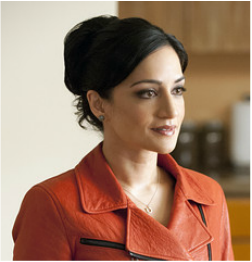
This is a great question--and one with which lots of bisexual people struggle. Ultimately, it's highly personal, and like any coming out question, the key isn't when it's "necessary" to anyone else; it's whether coming out is important to you. (<Btw, Kalinda Sharma on "The Good Wife" is the most interesting bisexual character on television, in my opinion.) Bisexuality can feel "invisible." When you're with someone of the opposite sex, people tend to assume you're straight; when you're with someone of the same sex, people tend to assume you're gay. I know it's not fair that people make these assumptions, but I admit that I do the same. I know at least two out bisexual women who are married to men and have biological kids with them. They're living a "straight" life and are indistinguishable from other straight people. It's not that I'm "denying" their sexuality, just that I don't really think about people's sexuality beyond their current relationship unless they're talking to me about it, referring to a same-sex ex, or waving a Pride flag at me. Here are a few things you might want to consider in your decision about whether to come out as bi:
Since this is a decision I've never had to make, I can't speak from personal experience. But I can say that I much prefer being "out" as who I am over not being out as who I am. I know I have plenty of bisexual readers out there. Any other advice you'd share? First off: Caitlyn Jenner is a brave human being. Anyone who has the courage to come out as something different--as something that others make fun of or ridicule or malign is brave. It takes courage to be yourself whenever "yourself" isn't what most other people are.
I've been increasingly bothered by the rhetoric surrounding Jenner's coming out, and about the precise nature of the ostensibly supportive comments I've been reading and hearing. The ones that bother me most have come from well-meaning straight women in the public eye who talk about how beautiful Caitlyn is (true) and how courageous she is (also true), and who show a sudden empathy for the plight of all trans people (by which, frankly, they tend to mean trans women). (Sidenote: I'm going to use the term "straight women" in this post to refer to a particular kind of straight woman that tends to: (1) embrace the gender binary (2) but support gay rights (3) but glare at me in the women's restroom. You know the type. If you're a straight woman who reads this blog all the time and doesn't look askance at butches in the restroom, please know that I'm not talking about you.) It's not that Caitlyn Jenner doesn't deserve kudos and support--she certainly does! But a significant chunk of the mainstream support I've seen seems to totally embrace gender norms. If Caitlyn looked like, say, Rachel Maddow, I daresay that she would have fewer straight female supporters talking on podcasts and posting on Facebook pages about much they love and support her. Nor, I suspect, would she have graced the cover of Vanity Fair. I do not think Bruce Jenner coming out as a woman is the big draw. I think the big draw is Bruce Jenner coming out as a woman of a certain kind--as a woman who embraces the type of femininity that fits neatly into the existing gender binary with which people are comfortable. I don't think they're thinking, "Wow, this really complicates how I think about gender!" I think they're thinking, "Wow, this gorgeous woman was trapped in a man's body!" As a New York Times article astutely pointed out the other day, the brain-body distinction is not so clear. Here's an excerpt: While young [Bruce Jenner] was being cheered on toward a university athletic scholarship, few female athletes could dare hope for such largess since universities offered little funding for women’s sports. When Mr. Jenner looked for a job to support himself during his training for the 1976 Olympics, he didn’t have to turn to the meager “Help Wanted – Female” ads in the newspapers, and he could get by on the $9,000 he earned annually, unlike young women whose median pay was little more than half that of men. Tall and strong, he never had to figure out how to walk streets safely at night. Those are realities that shape women’s brains. Which is true, at least to some extent. To say that Jenner always had a "woman's brain" doesn't take into account that she had a man's social experiences--and that our experiences powerfully shape our brain chemistry, our pocketbooks, and our self-understandings. Acknowledging this doesn't make Jenner any less of a woman (something the article really seems to miss). But not acknowledging this minimizes the social experiences of cis women and girls, and reduces trans identity to a simple case of "wrong brain, wrong body." Jenner had a certain set of experiences particular to her identity, and they should be respected in and of themselves. Frankly, I'm also jealous. I wish that straight women would embrace women who look like me with as much openness as I see them embracing Caitlyn Jenner. In short, I wish that straight women's newfound "acceptance" of different versions of what it means to be a woman extended more broadly in my own direction, not just in Caitlyn's--that they would show so much love and support for women whose gender presentation and ideas of womanhood don't look like their own. Last year, Australia made it legal for people to register their gender as "nonspecific"--that is, neither male nor female. Other countries, including New Zealand and Nepal, have similar laws. I support this, because I think people should be able to "identify" however they want, or to not "identify" as anything at all. My concern isn't with the third gender movement itself, but with how people understand it, and how they understand gender as a result. Articles like this one from Sunday's NY Times adopt language that, despite their apparent inclusiveness, actually reiterate the gender divide. In part, the article details the gender-related travails of Norrie May-Welby, an Australian who was designated male at birth, but by age four, "was drawn to the world of girls, playing with dolls..." Later in life, Norrie underwent gender reassignment surgery and identified as female. Although this development was gratifying, she found she did not want to "dissociate [her]self from aspects... simply because they were labeled masculine" (she now IDs as gender nonspecific, though she's fine with female or nonspecific pronouns). I have zero problem with Norrie's personal decisions or (quite courageous) journey. My problem is in the way this story is told, and in what this telling means. The story, and others like it, suggest that Norrie's doing "girl things" as a kid was a clue to her female-ness, but that her refusal to let go of "masculine" things later meant she wasn't "fully female," or that part of her was "truly male." In other words, much of the "third gender" discussion equates "masculine" things with maleness, and "feminine" things with femaleness. It reiterates the gender binary by trying to oppose it. That is, when you say that a third gender exists because some people like "boy stuff" and "girl stuff," you're still adopting the idea that "girl stuff" and "boy stuff" exist as categories. And I don't think they should; I think it's stupid for the categories to exist at all.
If you want your gender to be butch or nonspecific or agender or neutrois or anything else, I think that's awesome and that you should go for it. But I also think it's important to fight against the idea that people are necessarily something besides male or female simply because they don't fit into society's ideas of typical masculinity or typical femininity. Remember that post I wrote two days ago about Sunnie Kahle, the eight-year-old-girl who was kicked out of her Christian school for "looking like a boy?" My MOM was the one who told me about the story; I think she saw a little of her daughter in Sunnie. And my mom took ACTION! She wrote a letter to Sunnie's principal, and gave me permission to share it with you all:
Dear Ms. Bowman, Two days ago I read the Yahoo article about Sunnie Kahle, the 8-year old who was, until recently, a student in your school and who was, in essence, asked to behave more like a girl. That article hasn’t left my mind, so I decided to write to you. I can’t begin to tell you how appalled and saddened I am by your position on this. As a mother, grandmother, teacher, and most importantly, a Christian, I am surprised that you actually believe this is a Christian stand or that Christ would approve of such actions and comments. It is this kind of thinking that contributes to both non-Christians and Christians from staying away from the church – they don’t want to be a part of a religious community that is so arrogant and judgmental. My understanding of Christ’s teaching is that, rather than judging others, we should be trying to live our own lives as Christ lived. Do you really think He would turn this young girl away because of her clothing or because her hair was too short or because she wasn’t feminine enough? If you really believe that, then you and I pray to a different God. So what is it that concerns you, really? Are you simply afraid she might be “gay?” I understand your worry – the very thought makes us “old- school” Christians quite uncomfortable. My daughter was a tomboy as a young girl, much like Sunnie. She donned short hair and jeans and played on various sports teams. Now a woman in her 30’s, my daughter is one of the kindest, most caring, gentle spirits I have ever known. She is bright and courageous. She holds steadfast to a strong moral foundation and her faith in God. And, it turns out, she’s gay. Trust me when I say, it wasn’t easy for any of us, and especially not for her. It didn’t change her love for God, nor God’s love for her. But it certainly gave God a chance to teach me a thing or two about His love. It required us to really trust that God doesn’t make mistakes, and that he has a purpose for everyone’s life, and that He loves everyone. I suspect God needed me to learn that the outside of a person – that is, their clothes, their hair, their sexual preference - was the wrapping to his gift. The gift, the real blessing, is to be found in each individual’s soul. The soul HE created. I hope you come to see that this young lady, Sunnie Kahle, is just as special and unique, as much a blessing in our lives, as any other child, because she is God’s child. To try to change her spirit, to “fix” God’s perfection – my heart breaks for you. I hope you reconsider your stand and find peace in a new decision. God bless. |

|
 RSS Feed